The Best Houseplants for UK Bathrooms: Humidity-Lovers That Thrive Year-Round
British bathrooms present a peculiar growing environment. They tend to be small, often poorly lit, and subject to dramatic swings in temperature and humidity — steamy for twenty minutes after a shower, then cool and still for the rest of the day. Most houseplants would struggle with this kind of inconsistency, but a select group genuinely thrives on it. Get the selection right, and your bathroom becomes one of the easiest rooms in the house to keep plants looking lush with very little effort.
This guide covers the best plants for UK bathrooms specifically, with practical advice on placement, care, and where to buy them at reasonable prices. Whether your bathroom has a frosted north-facing window or no natural light at all, there are good options available.
Why Bathrooms Can Actually Be Great for Plants
The typical UK bathroom sits somewhere between 18°C and 24°C when in use, dropping slightly overnight. That temperature range suits most tropical houseplants rather well, since many of them originate from warm, humid climates where moisture is a constant in the air rather than something applied once a week with a watering can.
The humidity produced by showers and baths mimics the conditions these plants evolved in. Instead of misting your plants regularly — a task most people forget — the bathroom essentially mists them for free. This also reduces the frequency of watering you need to do manually, since the soil dries out more slowly in a humid room.
The main challenge is light. UK bathrooms frequently have small frosted windows, or in the case of many flats and terraced houses, no window at all. This does limit your choices, but it does not eliminate them. Some of the best bathroom plants are specifically adapted to low-light conditions, and a few genuinely prefer shade.
The Best Plants for UK Bathrooms with Some Natural Light
If your bathroom has a window — even a small frosted one — you have a good range of options. Frosted glass diffuses light rather than blocking it, so the room will still receive usable ambient light throughout the day.
Boston Fern (Nephrolepis exaltata)
The Boston fern is arguably the definitive bathroom plant. It is native to tropical forests where it grows in high humidity and indirect light, conditions that a UK bathroom with a window replicates fairly well. The arching, feathery fronds look striking in a hanging pot or on a high shelf, and the plant rewards consistent moisture with vigorous, dense growth.
Boston ferns can be found in most garden centres and supermarkets across the UK, typically priced between £8 and £20 depending on size. Marks and Spencer, IKEA, and Dobbies all stock them seasonally. Keep the compost consistently moist but not waterlogged, and avoid placing the plant directly above a radiator, which will dry the air and cause the fronds to turn crispy at the tips.
Peace Lily (Spathiphyllum wallisii)
The peace lily is a reliable performer in low to medium light and handles the fluctuating humidity of a bathroom very well. It produces white spathe flowers periodically throughout the year and has glossy, deep-green leaves that look clean and contemporary in most bathroom styles.
One practical advantage is that peace lilies are expressive plants — when they need water, the leaves droop noticeably, then recover quickly once watered. This makes them forgiving for people who do not follow a strict watering schedule. They are widely available in the UK for around £6 to £15 and are sold everywhere from Aldi and Lidl (when in their weekly plant offers) to specialist houseplant shops.
Do note that peace lilies are toxic to cats and dogs if ingested, which is worth keeping in mind if you have pets that occasionally investigate the bathroom.
Orchids (Phalaenopsis)
Moth orchids — the type sold in virtually every supermarket, florist, and garden centre in the UK — actually do very well in bathrooms, which surprises many people. They are epiphytes in nature, meaning they grow attached to trees rather than in soil, drawing moisture from the surrounding air. The humidity of a bathroom is genuinely beneficial to them.
Place a Phalaenopsis orchid on a bathroom windowsill where it receives bright, indirect light, and it will often rebloom more reliably than it would on a dry kitchen or living room shelf. Water by sitting the plastic pot in a few centimetres of water for twenty minutes once a week, then let it drain fully. Supermarkets in the UK sell Phalaenopsis orchids from as little as £5 to £8, making them one of the most affordable options on this list.
Chinese Evergreen (Aglaonema)
Chinese evergreens are one of the most adaptable houseplants available, tolerating low light, inconsistent watering, and high humidity with equal composure. The foliage comes in a wide range of colours — from deep green with silver markings to pink, red, and cream varieties — so there is a cultivar to suit most bathroom colour schemes.
They grow slowly, which means a plant bought in a 12cm pot will sit contentedly in the same spot for a year or more without needing repotting. Prices range from around £8 to £25 depending on the variety, with the more colourful pink and red types commanding a slight premium. The Green House and Patch Plants both offer good selections online if local garden centres do not carry the variety you want.
Plants for Bathrooms with No Natural Light
A windowless bathroom is genuinely challenging, but not hopeless. The key is to be realistic about what plants can survive on ambient artificial light, and to consider a rotation strategy where plants spend a couple of weeks in the bathroom before moving to a brighter spot to recover.
Cast Iron Plant (Aspidistra elatior)
The aspidistra earned its common name honestly. It is one of the toughest houseplants in existence, capable of surviving low light, temperature fluctuations, irregular watering, and general neglect without significant complaint. Victorian households kept them in hallways and parlours for exactly this reason, and they remain a sensible choice for difficult positions today.
Growth is very slow — do not expect rapid changes — but the dark, glossy, strap-like leaves maintain their appearance with minimal intervention. Water sparingly, perhaps once every ten to fourteen days in a bathroom environment, and feed with a diluted general-purpose liquid fertiliser once a month during spring and summer. Aspidistras are less commonly stocked than other houseplants but can be found at specialist nurseries or ordered online, typically for £12 to £30 depending on pot size.
ZZ Plant (Zamioculcas zamiifolia)
The ZZ plant has become a staple of UK houseplant culture over the past decade for good reason. It tolerates low light and infrequent watering better than almost any other plant, storing water in its rhizomes at the base of the stems. In a windowless bathroom, it will survive on the light from overhead bulbs with very little additional attention.
Growth will be minimal in true low-light conditions, but the plant will hold its shape and remain healthy for extended periods. Water sparingly — once every two to three weeks is usually sufficient — and avoid overwatering, which is the most common cause of ZZ plant failure. They are widely available in UK supermarkets and garden centres for between £8 and £20.
Pothos (Epipremnum aureum)
Pothos, sometimes sold under the name devil’s ivy, is an exceptionally versatile trailing plant that handles low light and high humidity with ease. The heart-shaped leaves come in plain green, variegated yellow-green, and white-marbled varieties, and the trailing stems can be trained along a shelf or allowed to hang from a pot on a high surface.
In a windowless bathroom, a golden or green pothos will persist and even grow slowly, particularly if the artificial lighting is on for several hours each day. It is worth noting that bright indirect light produces the most attractive variegation — in very low light, variegated leaves tend to revert to solid green — but the plant itself remains healthy regardless. Pothos are inexpensive and widely available, usually priced from £5 to £12.
Smaller Plants and Windowsill Options
Not every bathroom has space for a large potted plant. If your bathroom is compact — as many UK homes are, particularly in flats and Victorian terraces — smaller plants on the windowsill or a wall-mounted shelf are a more practical approach.
Air Plants (Tillandsia)
Tillandsias are epiphytes that require no soil at all, which makes them unusually flexible when it comes to display. They can sit in a small glass vessel, be mounted on a piece of driftwood, or placed directly on a shelf. In a humid bathroom, they absorb a significant amount of their moisture needs directly from the air, reducing the frequency of watering or misting required.
They prefer bright, indirect light and good air circulation — a slightly open window occasionally is beneficial — but they are tolerant of the variable conditions typical of a UK bathroom. Tillandsias are available from specialist houseplant shops and online retailers including Etsy sellers who specialise in airplants, typically for £3 to £10 per plant.
Spider Plant (Chlorophytum comosum)
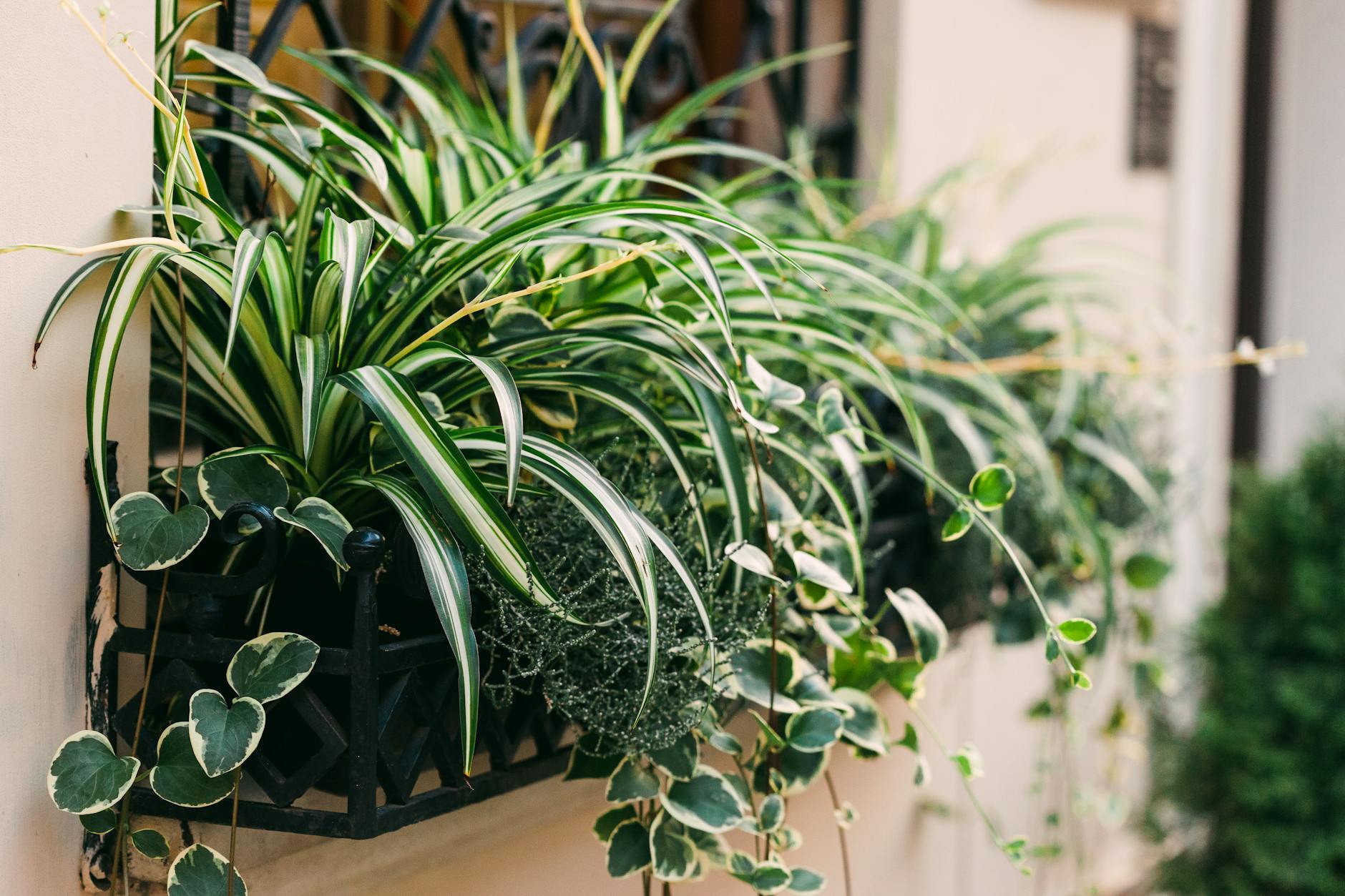
The spider plant is perhaps the most familiar British houseplant, having occupied windowsills and hanging baskets across the country for decades. Its tolerance for humidity, moderate neglect, and variable light makes it a natural choice for bathrooms, and the arching green-and-white striped leaves look tidy and unfussy in most settings.
Spider plants produce offshoots — small plantlets that hang from long runners — which can be potted up and given away or used to propagate new plants, making them excellent value over time. They are sold in virtually every UK supermarket, garden centre, and homeware shop for between £3 and £10.
Nerve Plant (Fittonia albivenis)
Fittonias are small, low-growing plants with intricately veined leaves in combinations of green and white, green and pink, or green and red. They originate from the rainforests of South America and genuinely need the kind of consistent humidity that a UK bathroom provides — in a dry room they rapidly wilt and develop crispy leaf edges.
Keep them on a bright windowsill out of direct sun, or under artificial light in a windowless bathroom. Their compact size — rarely exceeding 15cm in height — makes them ideal for a small shelf or the edge of a bath. Prices are low, usually £4 to £8, and they are stocked by most garden centres and supermarkets.
General Bathroom Plant Care Tips for UK Homes
Beyond choosing the right species, a few practical habits will keep bathroom plants looking their best throughout the year, particularly during the colder months when central heating can create unexpectedly dry
air, so it’s worth checking the moisture level of the compost before each watering. A simple finger test – pushing a fingertip about 1 cm into the soil – will tell you whether the top layer is dry enough to warrant a drink. Over‑watering is the most common mistake in bathrooms; the combination of limited airflow and residual moisture can quickly lead to root rot. To avoid this, always use pots with drainage holes and a shallow tray to catch excess water, and empty the tray after 30 minutes to prevent the roots sitting in standing water.
If your bathroom tends to become very dry in winter, consider grouping your plants together on a pebble tray. Place a layer of clean gravel or hydro‑stones in a shallow dish, add water just below the top of the stones, and set the pots on top. As the water slowly evaporates, it raises the humidity around the foliage without wetting the compost. For those who prefer a